The leaves, vine tips, flowers, and roots are edible; the vines are not. The leaves can be used like spinach and eaten raw, chopped up and baked in quiches, cooked like collards, or deep fried. Young kudzu shoots are tender and taste similar to snow peas.
Can you cook and eat kudzu?
Eat chopped kudzu leaves raw in salad or cook them like spinach leaves. Saute kudzu leaves, bake them into quiches or deep-fry them. Cook kudzu roots like potatoes, or dry them and grind them into powder. Use kudzu root powder as a breading for fried foods or a thickener for sauces.
Can you get a rash from kudzu?
Aside from being seemingly everywhere in the fall, kudzu bugs possess a few other traits that make them a particular nuisance. When a person is exposed to the kudzu bug, an allergic reaction may occur, resulting in staining of the skin and skin irritation (as pictured below).
Is kudzu the same as poison ivy?
Leaves are hairy beneath and along the margins, and are alternately arranged on the stem. Of these, only poison ivy has a trifoliate leaf, but differs from kudzu in that new leaves and stems are usually smooth and shiny and its woody perennial stems cling tightly to trees with air rootlets.
How does kudzu impact human health?
Kudzu, a leafy vine native to Japan and southeastern China, produces the chemicals isoprene and nitric oxide, which, when combined with nitrogen in the air, form ozone, an air pollutant that causes significant health problems for humans. Ozone also hinders the growth of many kinds of plants, including crop vegetation.
How do you use kudzu?
Kudzu roots can be dried and ground into a powder, which some people use as breading for fried foods or as a thickener for soups and sauces. What’s more, the kudzu plant leaves, vine tips, and purple flower blossoms are also edible. People typically use kudzu root as an herbal supplement or tea.
Is arrowroot and kudzu the same?
The kuzu plant is sometimes known as Japanese arrowroot. But kudzu root starch should not be confused with arrowroot starch. While both kuzu and arrowroot starches are made by a simple, natural process, Kuzu is far superior in jelling strength, taste, texture, and healing qualities.
What animal will eat kudzu?
Almost all grazing animals can eat kudzu, including sheep. Sheep and goats are the primary grazers on kudzu. Some studies have shown that sheep prefer kudzu over grasses or commercial hay when given the choice. While most parts of the plant are edible, different animals have different preferences.
What is kudzu used for in Japan?
Kudzu powder is used in Japan to make an herbal tea called kuzuyu.
Does kudzu make you sleepy?
These data suggest that the administration of kudzu root extract does not disturb sleep/wake cycles of moderate drinkers, and as such its utility as an adjunct treatment for alcohol dependence remains free of any potential side-effects on sleep.
What does early poison ivy look like?
Young poison ivy leaves often start out dark red and shiny, then gradually turn green and less shiny over time. Mature leaves generally have a pointed tip, but new leaves may be rounded at the tip initially. In addition to leaves, the poison ivy plant may grow clusters of small, green of flower buds in spring.
How does kudzu reduce alcohol cravings?
Recent analysis of the kudzu root has revealed it contains 3 active isoflavones that have antidipsotropic activity: daidzin, daidzein, and puerarin. Studies with these components demonstrated significant reductions in alcohol consumption in animal models.
Does kudzu make you itch?
When given by IV, the kudzu ingredient, puerarin, has been associated with itching and nausea, as well as headache and fever. It has also caused red cells to break inside blood vessels.
What kills poison ivy?
To eradicate poison oak and poison ivy chemically, use an herbicide that contains glyphosate, triclopyr, or a 3-way herbicide that contains 2,4-D amine, dicamba, and mecoprop. See Table 1 for products containing these active ingredients. These herbicides can kill desirable plants, so be careful.
How do you identify a kudzu vine?
Biology & Identification
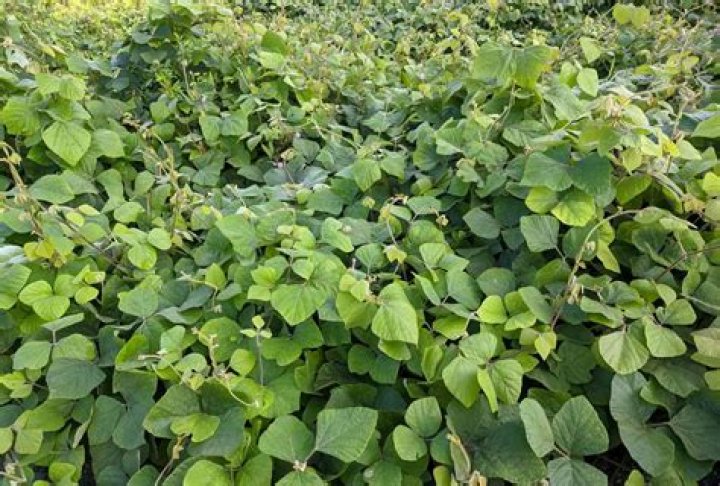
Kudzu produces long, hairy vines from a central root crown. Kudzu has dark-green, hairy, alternate, compound leaves, 2 – 8 inches (5 – 20 cm) in length with three oval- to heart-shaped leaflets 3 – 4 inches (8 – 10 cm) long at the end; these leaves may be slightly or entirely lobed.
How do you take kudzu extract?
A single dose of two grams of kudzu extract was taken before a drinking episode. The appropriate dose for you may depend on factors including your age, gender, and medical history. Speak to your healthcare provider to get personalized advice.
How has kudzu both helped and harmed habitats?
Kudzu’s environmental and ecological damage results from its outcompeting other species for a resource. Kudzu competes with native flora for light, and acts to block their access to this vital resource by growing over them and shading them with its leaves. Native plants may then die as a result.
Is kudzu good for your liver?
The kudzu vine is potentially highly beneficial in treating liver damage, as it scavenges reactive free radicals and boosts the endogenous antioxidant system.