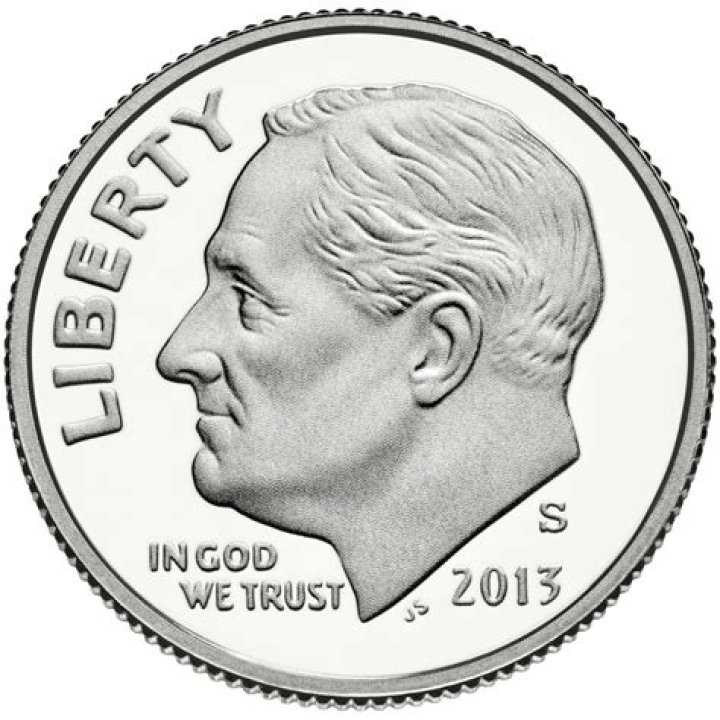
Dime. The dime was established by the Coinage Act in 1792, but in the act it was called a “disme.” Disme (pronounced dime) was an old word, from French, for tenth, which came from the Latin decima. The more common spelling even at that time was “dime” and that was what people used as soon as it was minted.
Why is it called a penny?
During the colonial period, people used a mixture of coins from other countries. A popular coin was the British penny, which was the smallest part of the British pound coin. That’s why we call our cent a “penny.” In 1909, Abraham Lincoln became the first real person on a U.S. circulating coin.
How did the dime get its name?
The word dime comes from the Old French disme (Modern French dîme), meaning “tithe” or “tenth part”, from the Latin decima [pars].
The term nickel has not always been the name for the United States’ five-cent coin. It wasn’t until 1883, after intense lobbying efforts by industrialist Joseph Wharton, that the nickel alloy caught on, replacing the half dime and becoming widely circulated as the “nickel,” named after the metal by which it was made.
Why is a dime smaller than a nickel?
The Answer: Actually, the first five-cent coin in U.S. history was made of silver and was smaller than today’s dime. That’s because when coins were first produced by the U.S. The size of the coin was increased and its metallic content was changed from silver and copper to a combination of copper and nickel.
The word “dollar” is the English form of “thaler”, a German word which means “person or thing from the valley”. The “thaler” was the name given to the first minted coins from silver mines back in 1519 in Joachimsthal, Bohemia, therefore, America’s currency unit is named after them.
Why is George Washington on the quarter?
The coin features a portrait of the first President of the United States, George Washington. Washington was born on February 22, 1732, and this coin was produced to commemorate the 200th anniversary of his birth.
Why is a cent called a cent?
The cent is a monetary unit of many national currencies that equals 1⁄100 of the basic monetary unit. Etymologically, the word ‘cent’ derives from the Latin word centum meaning hundred. The cent sign is commonly a simple minuscule (lower case) letter c.
Franklin Delano Roosevelt isn’t just honored on the coin’s face because he was the 32nd president of the United States. After President Franklin Delano Roosevelt died in April 1945, the Treasury Department decided to honor him by placing his portrait on a coin.
Why does a quarter have 119 ridges?
Mint began adding ridges to the coins’ edges, a process called “reeding”, in order to make it impossible to shave them down without the result being obvious. The reeded edges also made coin design more intricate and counterfeiting more difficult. The U.S.
Does America have pennies?
The United States one-cent coin (symbol: ¢), often called the “penny”, is a unit of currency equaling one one-hundredth of a United States dollar.
Is a 1964 nickel silver?
Mint are still composed of 90% silver today in limited quantities. The key thing to know: All U.S. dimes, quarters, and half dollars minted in 1964 or earlier are composed of 90% silver.
The nickel is the United States’ five-cent coin.
Why is the penny copper?
In 1943, copper was needed for war materials, so pennies were made out of zinc-coated steel. Because the color was silvery, it was easy to mistake a penny for a dime. Fortunately, pennies were only made that way for one year.
What is a tenth of a penny called?
A mill of this kind is a coin, worth one-tenth of a penny.
Is a penny bigger than a dime?
Worth ten cents, the dime is not ten times bigger than the penny. In fact, it’s actually smaller! Thus, the dime had to be rather small, since it only had one-tenth the amount of silver that the dollar coin had. Eventually, other coins, such as nickels and pennies, were needed to make transactions easier.
By the 1860s the new man identified by the fossils was named Neanderthal. (The German given name is from Old Testament Hebrew, but seems not to have been used by the English; it is, however, cognate with Spanish Joaquín.) The English spelling had been modified to dollar by 1600.
Why are coins called pieces of eight?
The Spanish dollar coin was worth eight reales and could be physically cut into eight pieces, or “bits,” to make change — hence the colloquial name “pieces of eight.” The dollar coin could also be cut into quarters, and “two bits” became American slang for a quarter dollar, or 25 cents.
Why did Australia change from pounds to dollars?
The decision to change from the Australian pound (with its awkward shillings and pence) to a decimal currency – the Australian dollar – had been a pragmatic, economic one. Yet decimalisation became an opportunity for Australia to assert itself as an increasingly self-assured and forward-thinking country.